Social Media Misinformation Blamed for Soaring ADHD Prescriptions Worldwide

- EXPLORE FURTHER: Widely Used Medication Might Eliminate Symptoms of ADHD
Popular applications and social media personalities have fueled a considerable increase in ADHD Diagnoses, according to recent studies cautioned today.
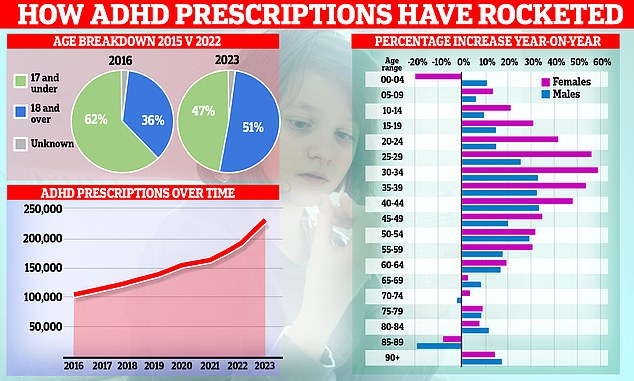
Experts discovered that prescriptions for medications to address the condition have surged nearly 20% compared to last year following the onset of the pandemic.
However, social networking platforms such as TikTok And according to the scientists, Instagram posts highlighting everyday issues as possible signs of ADHD have planted seeds of misinformation, leading individuals to pursue diagnoses.
Users should instead treat this information with caution, as the accuracy and reliability of the content can differ greatly, they advised.
This warning has come at a time when an increasing number of public figures have been opening up about their struggles with the same condition over the past few months.
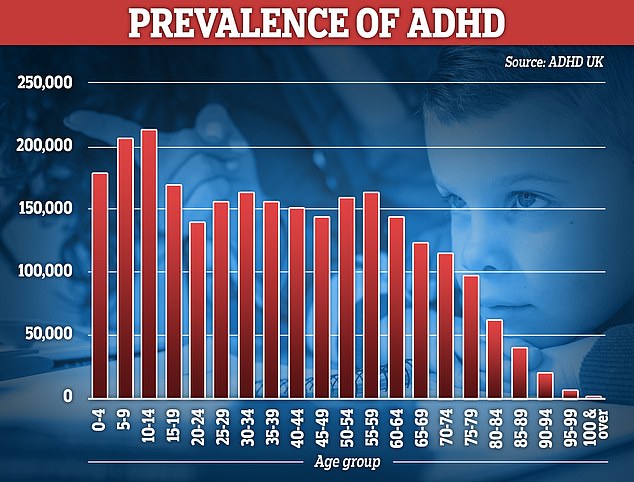
Up until this point, approximately five percent of children and as high as four percent of adults were believed to suffer from ADHD in England.
In this research, experts from Aston University and the University of Huddersfield found that national prescription rates increased from 25.17 items per 1,000 individuals in 2019/2020 to 41.55 items in 2023/24, representing an average yearly rise of 18 percent.
Nevertheless, the increase reached up to 51 percent. Birmingham and Solihull. In contrast, Norfolk and Waveney saw an increase of only 5 percent.


The group examined English prescription information for the five ADHD medications that are presently approved, analyzing them at national, regional, and NHS integrated care board (ICB) levels.
There were three stimulants mentioned: methylphenidate, which is marketed as Ritalin and Concerta; dexamphetamine; and lisdexamphetamine.
Atomoxetine and guanfacine made up the remaining two non-stimulant options.
The researchers discovered that methylphenidate was still the most commonly prescribed medication, with a rate of 19 prescriptions for every 1,000 individuals.
However, the most significant rise was observed for lisdexamfetamine, with prescriptions climbing by 55 percent compared to the previous year.
Writing in the journal BMJ Mental Health The researchers indicated that social media was probably responsible for the significant increase.
'They noted that heightened public and professional awareness, largely fueled by social media platforms such as TikTok and Instagram, may have prompted more individuals to pursue evaluation, diagnosis, and treatment.'
Platforms such as TikTok and Instagram have emerged as new centers for attention deficit hyperactivity disorder (ADHD) awareness initiatives, where countless individuals share their personal stories, management techniques, and paths to being diagnosed.
Although social media has played a key role in increasing ADHD awareness, it’s important to be cautious when consuming this information since the accuracy and reliability of the content can differ greatly.
'Disinformation on these platforms could result in misunderstandings regarding symptoms, diagnosis, and treatment.'
They included: "It is crucial to conduct research on reliable techniques for reviewing and managing ADHD-related content on social media platforms to guarantee that awareness initiatives do not unintentionally disseminate false information."
The extensive disruptions and stresses triggered by the pandemic might have contributed to increased prescription rates, according to the research team.
The pandemic has significantly changed everyday activities like adopting online or hybrid methods for education and employment, leading to heightened stress for numerous individuals, according to them.
These modifications might have intensified ADHD symptoms in certain individuals, rendering these symptoms more apparent and leading people to pursue a diagnosis and treatment.
Individuals with ADHD often experience difficulties such as lack of attention, excessive activity, and impulsive behavior. They might find it challenging to focus on specific tasks or exhibit intense restlessness.
The use of medications to alleviate severe symptoms was backed by substantial evidence, according to the researchers.


Today, experts unaffiliated with the research have recognized that healthcare providers have observed a notable rise in the number of individuals seeking assistance for ADHD.
Dr. Ulrich Muller-Sedgwick, an advocate for ADHD at the Royal College of Psychiatrists, stated: "This trend can be attributed to several factors such as better identification of ADHD in females, increased public understanding, and the effects of the pandemic, which worsened symptoms for numerous individuals."
The correct diagnosis along with appropriate treatment, which includes medications and necessary accommodations, can significantly improve individuals' well-being and enable them to achieve their fullest potential in educational settings like schools and universities as well as in professional environments.
'Expanding ADHD services via focused investments would guarantee individuals get the essential support they require,' we understand.
Dr. Paul Keedwell, a consulting psychiatrist and neurodiversity expert, likewise proposed that there 'There might be an element of diagnosing too much.'
He stated: "Even though there isn't concrete evidence supporting this, it's crucial that each person gets a comprehensive evaluation conducted by a psychiatrist."
'Numerous other psychiatric disorders can lead to symptoms similar to those of ADHD.'
For instance, my clinical practice has uncovered numerous instances where issues with inattention stemmed from undiagnosed depression instead of ADHD.

Additionally, ADHD frequently coexists with other mental health conditions such as autism spectrum disorder, complex trauma, anxiety, and depression.
Others have also previously alerted that unscrupulous private clinics are diagnosing the condition excessively.
However, experts have also contended that ADHD was not until 2008 formally recognized in the UK as an adult-related condition.
Previously, it was seen merely as a childhood issue that children would eventually grow out of.
Consequently, instead of being overdiagnosed, some experts argue that many adults currently receiving an ADHD diagnosis may have had their symptoms overlooked for years.
Read more