Unveiling the Overlooked Reason Behind Learning Disabilities, Frequently Confused with Autism – International Edition (English)

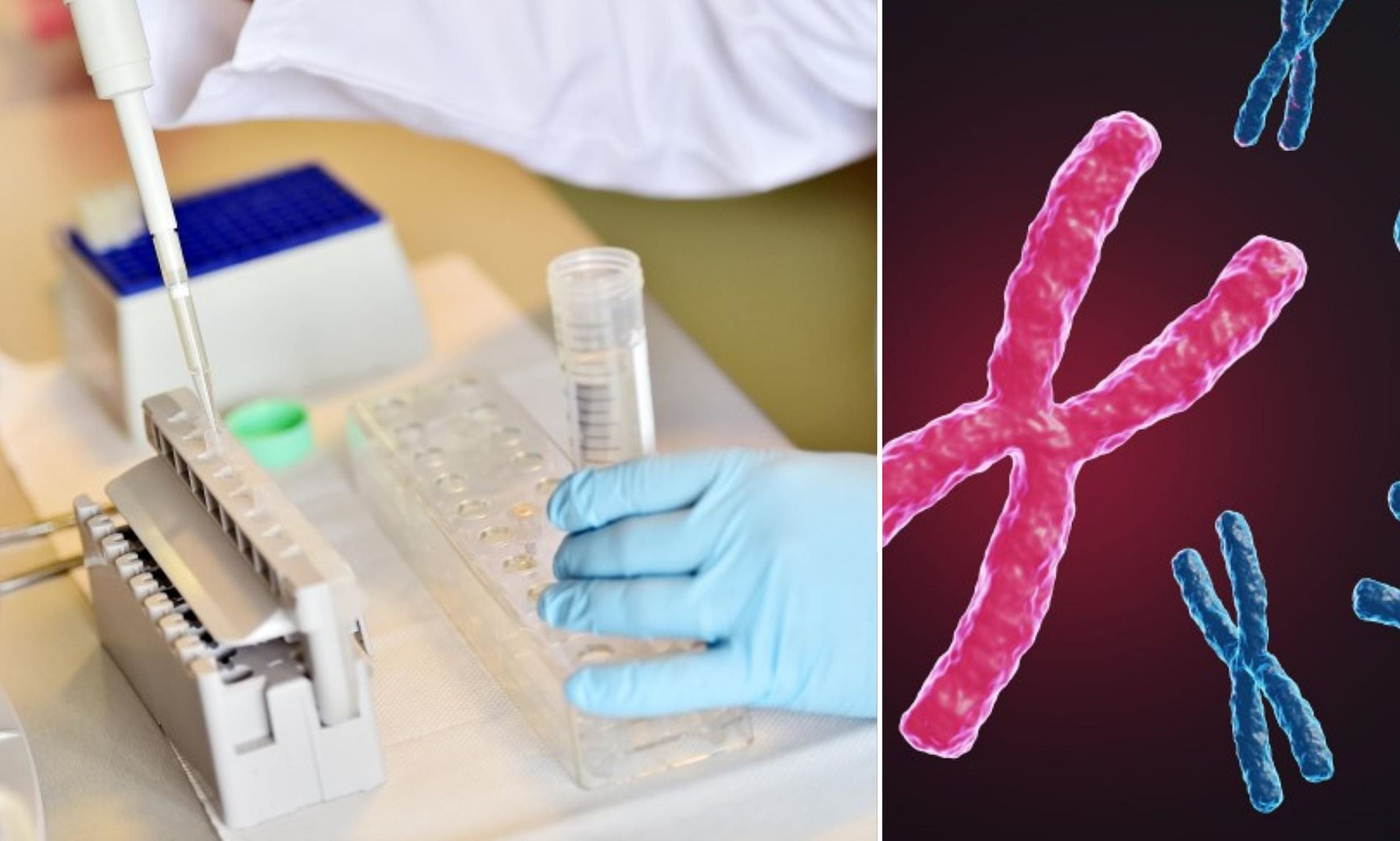
Fragile X syndrome, which occurs approximately once every 4,000 males and once every 6,000 females, is brought about by a genetic alteration that hinders brain development.
Not all individuals carrying the mutation will develop the condition. Approximately one in every 250 women and one in every 600 men carry the defective gene.
However, carriers are more susceptible to experiencing earlier symptoms. menopause .
However, this condition is frequently disregarded by medical professionals, as experts have cautioned that such neglect "must be addressed immediately."
Pete Richardson, who leads the Fragile X Society, stated: "Despite being the leading genetic source of intellectual disabilities, there is an unexpectedly low level of public knowledge about Fragile X syndrome."
Individuals carrying the Fragile X premutation typically remain unaware of their condition.
When a woman exhibits symptoms of early menopause, being identified as a Fragile X carrier tends to be one of the final possibilities that physicians consider.
We require this to shift. Immediately.
The organization is encouraging individuals who believe they might be carriers of the gene to reach out to their general practitioner for a potential Fragile X (FMR1) DNA test.
Although blood samples might be collected on-site, they will still undergo testing at a genetic center.
At present, the Government does not advocate screening for this condition during pregnancy because some infants who test positive may never exhibit symptoms.
Fragile X syndrome arises due to changes in a gene located on the X chromosome, hindering the creation of a crucial protein required for proper brain development.
The organization states that individuals are more prone to being carriers if their families have a history of Fragile X syndrome—or of an intellectual disability, developmental delay, or autism with an unidentified origin.
It is thought that women with ovarian insufficiency may have as high as a 15 percent probability of being carriers of Fragile X syndrome.
When Alex McQuade, a 41-year-old mother, noticed that her son wasn't reaching his anticipated developmental milestones, she grew worried.
She stated: "There wasn't any discussion regarding genetics at any time, even though both my husband Chris and I informed the doctors about my female cousin who has a child that I believed might have autism."
The pair from Groby, Leicestershire, believed that the problems encountered by their child, Evan, who is currently 10 years old, were an isolated incident.
Nevertheless, their second child, Xander, who is now seven years old, faced comparable issues.
Mrs. McQuade stated, "I started conducting my own investigation online. I recognized it resembled autism, yet autism did not fully encapsulate the situation."
It didn’t take long for me to stumble upon Fragile X syndrome. Upon seeing the list of associated physical symptoms, I was certain that the boys were affected by it.
Fragile X syndrome presents with a range of physical, cognitive, and behavioral symptoms, which can include mild to severe intellectual disabilities.
Nevertheless, certain females with the condition might seem less impacted because they possess two X chromosomes, and typically only one of these is influenced by Fragile X, as explained by Mr. Richardson.
Some women seem unimpacted, others experience a slight learning impairment, while some face a more significant learning challenge.
Being autistic entails having a brain that functions distinctively from what is typically considered standard.
It isn’t an illness; individuals possess it since birth, though it might go unnoticed until childhood or even much later in life.
Autism spans a continuum of conditions. Certain individuals can manage their daily activities without extra support. However, some might require constant aid.
Common indicators of autism encompass difficulties with communication, feeling overpowered by specific scenarios, and engaging in repetitive behaviors.
In recent years, rates have skyrocketed, leading to claims that the condition is currently being diagnosed excessively.
In April, it came to light that children throughout the UK face waits of up to four years for an autism diagnosis.
Approximately 700,000 people in Britain and 5.4 million adults in the United States have received an autism diagnosis.
Based on a 2021 study from Newcastle University, approximately one out of every 57 children in the United Kingdom falls within the autism spectrum, which equates to 1.76 percent.