Farm Workers Queue Overnight in Ho Chi Minh City for a Chance at a South Korean Visa


With the increasing demand for seasonal jobs in South Korea, workers from different regions are camping out overnight near the Korean Visa Application Center in Ho Chi Minh City.
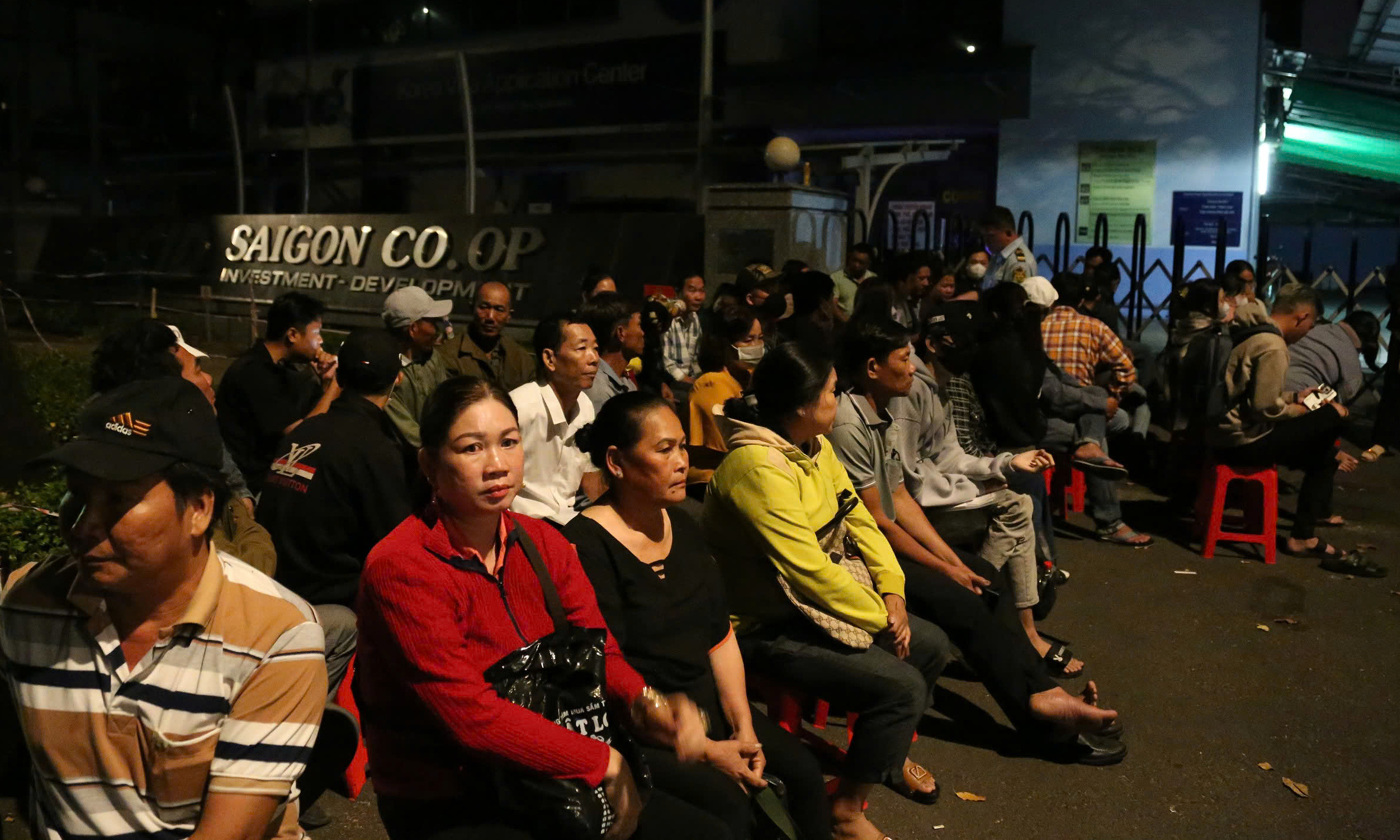
Just after midnight on Thursday, many individuals hailing from several southern provinces gather at the office located on Dien Bien Phu Street in District 3 to submit their applications for a short-term employment visa, even though the office doesn’t open until 8:30 a.m.
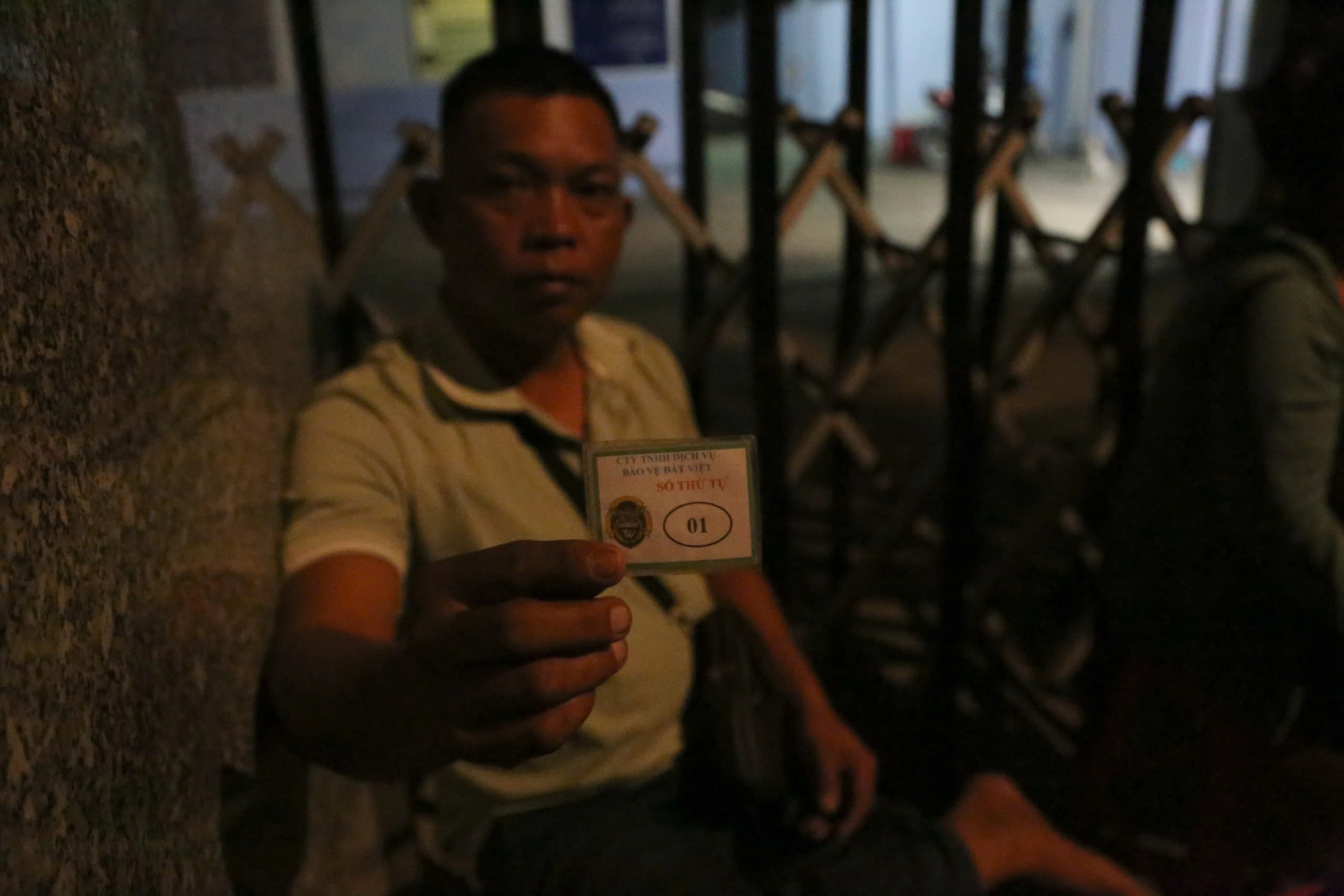
Nguyen Quoc Son, aged 37, reached the location at 11:30 p.m. and obtained the initial spot in the line. His intention is to work in Sangju Province, focusing on growing grapes and ginseng, supported by his younger sibling.
He left his factory position in Vietnam last year to work in South Korea for eight months, where he earned more than VND40 million ($1,600) each month.
Considering the greater earnings potential in that nation as opposed to Vietnam, he opted to go back this year accompanied by his spouse.
There's currently intense competition for visas, which compelled us to arrive early. Should we have waited till morning, it could've been too late.
|
|
Nguyen Quoc Son displays his number one queue ticket late on March 26, 2025, outside the Korean Visa Application Center in Ho Chi Minh City’s District 3. The photo was taken by VnExpress/Dinh Van. |
Nguyen Thi Thuong, aged 50 and hailing from Bac Lieu Province, mentioned that she is considering applying for employment in South Korea through her niece’s sponsorship. Her niece is married to a Korean citizen, and Nguyen plans to find work at a vegetable farm similar to her sister’s plan.
She attempted to apply the day before but arrived at the center after hours, leading her to come back sooner today.
Previously, she spent five months working in South Korea where the earnings were consistent.
The climate was chilly initially but became more tolerable over time; however, the compensation is significantly higher.
Living with family members decreased her costs.
Around 1:30 a.m., security personnel started handing out queue tickets. Normally, the center gives out approximately 180 per day; however, the number of people seeking entry frequently surpasses this limit.
|
|
Laborers line up late into the night to submit their applications for a South Korean temporary employment visa. Photo by VnExpress/Dinh Van |
Expansion of seasonal employment initiatives
Seasonal workers from Vietnam have been traveling to South Korea since 2018.
Pham Viet Huong from the Ministry of Home Affairs' Department of Overseas Labor stated that 17 Vietnamese provinces and cities have pacts with South Korea enabling their workforce, primarily involved in agriculture, to remain between three to eleven months.
The count has progressively grown, jumping from 433 in 2022 to 2,157 in the previous year.
Huong credited this growth to mutual benefits: South Korea faces labor shortages, while Vietnamese workers are keen on seeking job opportunities overseas.
Farming positions generally do not demand knowledge of foreign languages or high-level degrees yet offer competitive salaries.
The workforce typically spans ages from 30 to 55 years old.
In addition to initiatives led by the government, South Korea permits long-term inhabitants and spouses of Korean nationals to petition for family members.
Dong Thap was among the first four provinces to sign these seasonal work agreements.
Nguyen Thi Minh Tuyet, who serves as the deputy director of the department responsible for home affairs, mentioned that although employees were originally granted three-month C-4 visas, they can now apply for E-8 visas with durations extending up to five, eight, or eleven months.
She stated that the province is collaborating with Gyeonggi and Gangwon provinces and is currently in talks with an additional one.
She mentioned that there has been a rise in the number of employees from Dong Thap looking for work opportunities in South Korea, especially among individuals who have recently become unemployed due to job losses at factories located in Southern regions like Ho Chi Minh City and provinces such as Binh Duong and Dong Nai.
Dong Thap’s employment service center is promoting the program among workers aged between 35 and 45.
Seasonal workers in South Korea usually make approximately VND40 million per month.
However, since employers also provide accommodation and essential items, employees only need to cover their own food expenses. This allows them to frequently save around VND30 million each month, and some pairs manage to accumulate almost VND500 million over an eight-month period.

|
|
A laborer from Dong Thap Province in Vietnam works on a farm in South Korea. The image was taken by VnExpress/Minh Tuyet. |
Nguyen Nam Cuong, a PhD researcher specializing in human geography at the Academy of Korean Studies, mentioned that rural areas in South Korea are grappling with significant labor shortages.
In 2021, the Ministry of the Interior and Safety pinpointed 89 areas experiencing population decline, characterized by having more than 20% of their inhabitants being 65 years old or above.
In these locations, South Koreans have the ability to sponsor family members from abroad to help address labor shortages.
Nguyen Nhu Tuan, who serves as the deputy head of the Asia–Africa market division at the Department of Overseas Labor, recommended that potential employees confirm the list of 17 approved South Korean provinces.
He similarly cautioned people about scam brokers taking advantage of the sponsorship policy and advised against paying inflated charges.
Seasonal employees are required to cover expenses related to airfare, visa fees, and travel insurance.
If additional requests are made, they ought to proceed with caution and reach out to local authorities for assistance.