Deep-Sea Creatures Face Rush to Be Named Amid Mining Boom

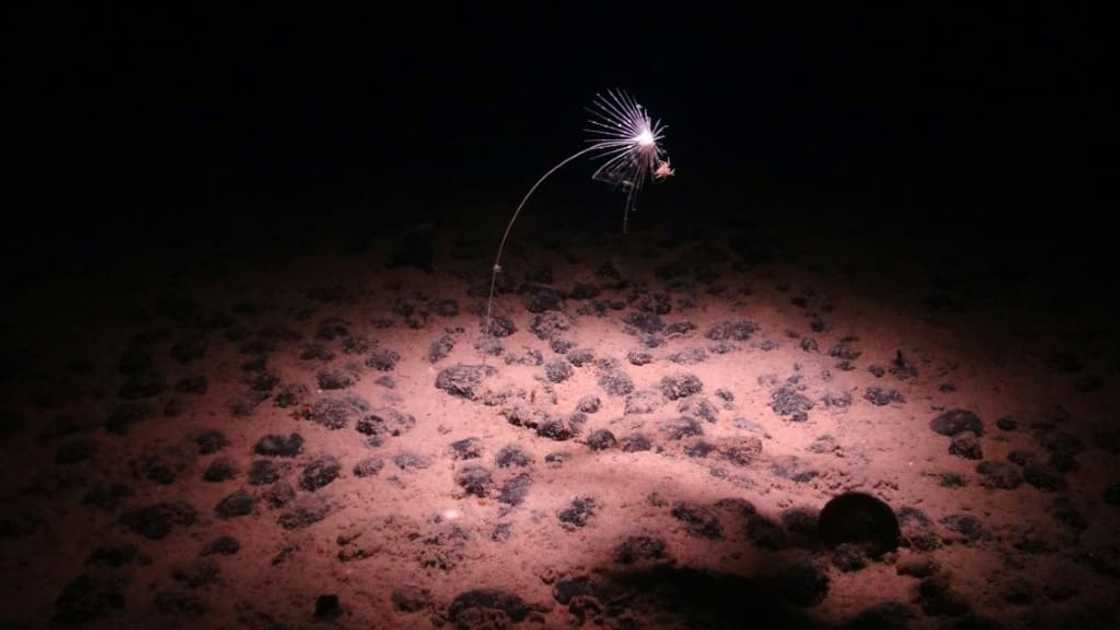
In the frigid, dark depths of the Pacific Ocean, the seafloor is strewn with metallic rocks that attract mining interests, alongside vast populations of bizarre and uncommon creatures that remain largely unfamiliar to scientists.
Scientists are hurriedly working to classify countless new species that have been recently identified.
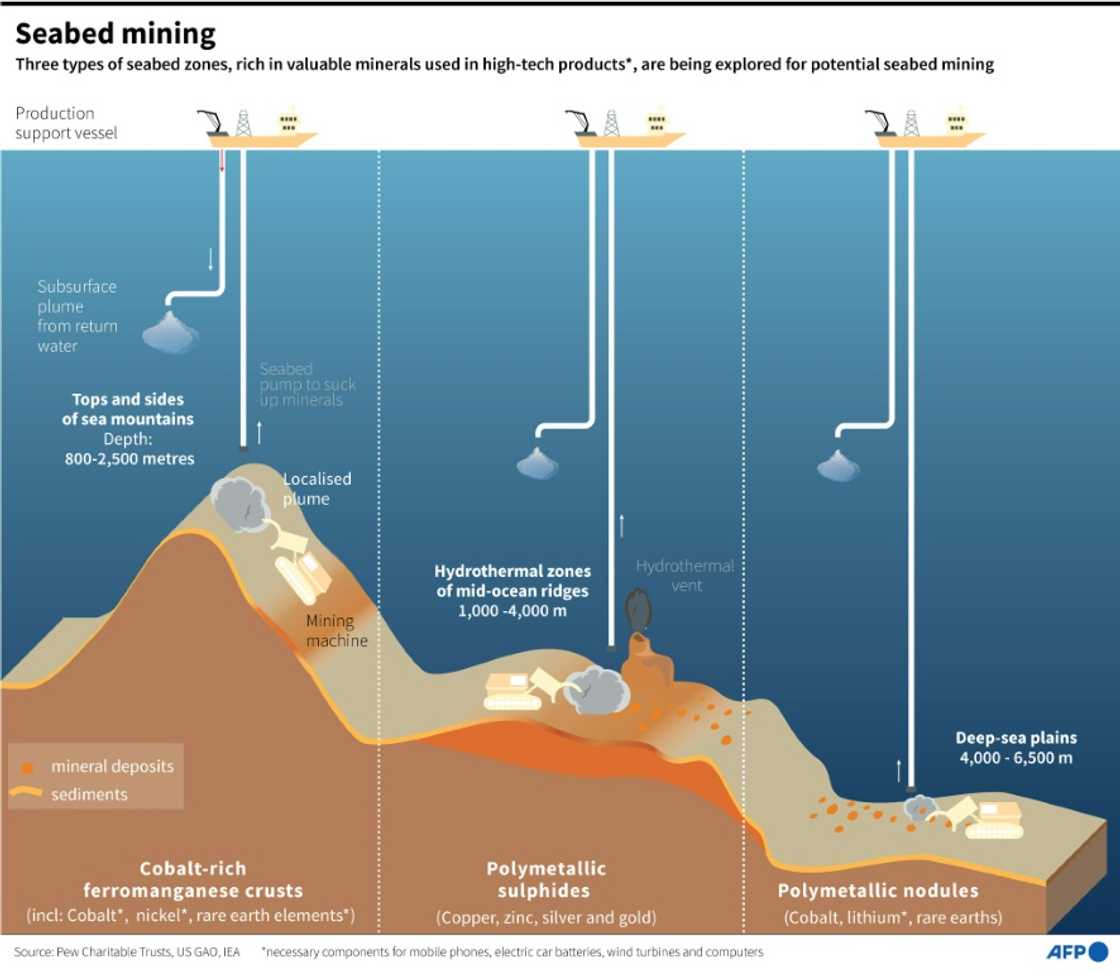
The mining sector is urging regulatory bodies to finalize guidelines that might pave the way for resource extraction in portions of the extensive Clarion-Clipperton Zone (CCZ) located between Hawaii and Mexico.
Previously considered an underwater desert, the CCZ is now recognized for its rich biodiversity.
They vary from minuscule worms dwelling in the murky sediments, to sponge species that float attached to rocks akin to waterborne balloons, and a colossal sea cucumber known as the "gummy squirrel."
Activists argue that this variety of life forms represents the genuine wealth of our planet's biggest and most mysterious ecosystem.
Experts caution that mining activities might push species toward extinction before we can even identify them.
The interest in extracting the " nodules," which are roughly the size of potatoes and hold valuable metals utilized in products like smartphone screens and rechargeable batteries, has led scientists to investigate the CCZ area.
"As a result of our efforts to exploit that region, we now possess a much deeper comprehension of it than we otherwise would have achieved," stated Tammy Horton from Britain’s National Oceanography Centre (NOC).
Researchers have retrieved sediments using box cores lowered from vessels and utilized remotely operated vehicles to capture images and gather specimens from the ocean floor.
In any specific area of the CCZ seabed, a quick look might reveal only one lone brittle star, yet scientists rarely encounter the same individual more than once.
"There are 'enormous quantities of uncommon species,'” Horton mentioned, further noting that a significant portion of this biodiversity could be found within the organisms inhabiting the mud.
The nodules also serve as a unique habitat, much like tiny coral gardens.
'First step'
The initial inventory of data from scientific investigations in the CCZ, released in 2023, revealed that approximately 90 percent of the 5,000 animal species documented were previously unknown to scientists.
The ISA aims to have more than a thousand species documented by 2030 in areas of interest to mining companies.
The process is painstaking.
Whenever feasible, every creature should be illustrated, dissected, and provided with a molecular "barcode," which acts as a DNA fingerprint enabling other scientists to recognize it.
Horton and his team of experts spent an entire year describing 27 out of over a hundred unnamed amphipods — a species of tiny crustaceans.
"The primary and essential initial step toward comprehending any environment involves identifying the species present, determining their population numbers, and assessing the extent of their geographical spread," she explained to AFP.
This would establish a foundation for understanding life in the abyssal plain, enabling a clearer comprehension of possible risks.
The conservation organization Fauna & Flora has indicated that the risks include harm to the marine food chain as well as the possibility of intensifying climate change due to the disturbance of sediments that store heat-trapping carbon.
The ISA has to finalize the global deep-sea mining regulations this year, yet significant tasks remain unfinished.
Cold War connections
The earliest known mining trial area is a section of the CCZ seafloor that was disturbed in 1979.
Daniel Jones, a NOC researcher who sifted through archival records to determine the exact site, mentioned that the operation was part of a CIA scheme aimed at retrieving a sunken Russian nuclear submarine under the guise of conducting deep-sea mining activities.
According to Jones, the CIA rented a vessel for actual deep-sea mining operations.
He discovered an antique photo depicting the approximately eight-meter-(26-foot)-wide device utilized for collecting nodules.

His group went to the testing location in 2023, over four decades following the initial disruption.
He mentioned that the machine trails could still be easily seen on the ocean floor.
Jones informed journalists lately that they observed "initial signs of biological restoration" on the mining-affected routes; however, animal populations had yet to return to their usual levels.
The sluggish rate at which changes occur in the CCZ can be seen through the nodules themselves, which have probably taken millions of years to form.
Each likely began as a fragment of solid material — such as a shark’s tooth or a fish’s otolith — that landed on the ocean floor.
They gradually expanded next, as they attracted minerals that are present in the water at very low natural levels.
They include metals such as cobalt that are highly sought after during the energy transition.
However, the European Academies of Science Advisory Council (EASAC) has stated that the requirement for the nodules has been exaggerated and has called for a halt to mining activities.
Michael Norton, the EASAC Environment Director, stated that initiating deep-sea exploitation would likely prove difficult to halt thereafter.
It’s a one-way road," he stated. "Once you head down it, you won’t turn back easily.